


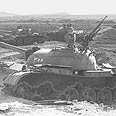
Yom Kippur War (1973)
None
The Yom Kippur War began when a coalition of Arab forces launched a surprise attack on Israel on October 6, 1973, the day of Yom Kippur which is the holiest day of the year in the Jewish religion.
Although by the end of the three-week war Israel recaptured areas lost in the start, the war came to be considered a grave failure by the Israeli military which misinterpreted the buildup of Egyptian forces along the Suez canal as military exercises instead of an attack. Israel's losses in the war marked the first time the Arab world saw Israel as militarily vulnerable.
With the sneak attack led by Egypt and Syria, the Arab countries hoped to win back territory lost to Israel in the 1967 Six-Day War. Saudi Arabia provided financial support for the war.
In the first few days of the war, Egyptian forces swiftly crossed the Suez Canal and advanced, while Syrian moved into the Golan Heights and nearly reached the pre-1967 border with Israel.
The tide began to turn on October 10 when Israeli forces pushed the Syrians back and advanced into Syria proper. In the backdrop of the Cold War, the Soviet Union sent airlifts of aid to Damascus and Cairo, which were answered by U.S. airlifts to Israel.
On October 21, Israeli forces crossed the Suez Canal and surrounded the Egyptian Third Army. This in effect led to the end of the war, with ultimately led to a cease-fire that went into effect on October 25.
Both Israel and the Arab countries claimed victory in the war, but both sides suffered heavy losses. Some 6,000 Israeli soldiers were killed or wounded in 18 days and an estimated 8,500 Arab soldiers were killed.
The results of the war were a heavy psychological blow for Israel, as it destroyed its image of an invincible military, Arab confidence was boosted and Israel became more dependent on the U.S.
After the war, the Agranat Commission of Inquiry investigated who was responsible for Israel not being prepared militarily for the war. Although the commission's findings exonerated Prime Minister Golda Meir, the results of the war prompted her to resign in 1974.
Related links:
